
Welcome to Tea or Coffee. Explore our practical guides designed for better focus and steady energy throughout your day.
Matcha & Tea Lover Gift Guide: Gifts They’ll Actually Use
Matcha gifts usually miss in one of two ways: a powder that doesn’t suit how the person drinks it, or beautiful tools for a preparation style they never use. This matcha gift guide helps you avoid both, starting from your budget and then from how the person on your list actually makes their tea.
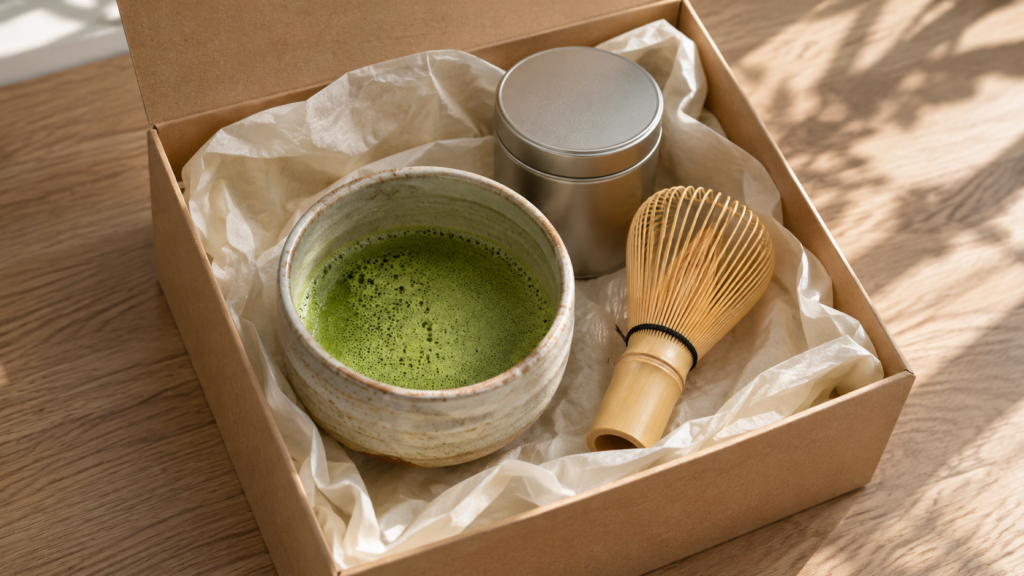
Matcha Gift Guide: Quick Picks by Budget
These bands are rough orientation for US shopping, in USD before shipping and tax. Prices change with sales, sizes and seasons, and two items in the same category can land in different bands, so check the current price of the exact item you choose.
Under $25
This band suits single, useful items. A bamboo whisk, a small sifter or a whisk holder can all fit here, as can a small tin of powder from some brands. A single item works best when it fills a gap in what the person already owns, so a whisk for someone without one, or fresh powder for someone who already has the tools.
Under $50
Here you can often put together a simple build-your-own set: a powder plus a bamboo whisk and scoop, with the recipient using a bowl they already have. This band can also cover a larger or higher-quality tin of powder, or powder paired with a handheld frother for someone who mostly makes lattes. For the pre-made kits selected in our starter-kit guide, plan on the premium budget below.
Under $100
This band gives you room to combine a good powder with better tools, such as a quality bowl, whisk and sifter bought separately. It can also cover a thoughtful tea gift for someone who doesn’t drink matcha, such as loose-leaf tea with an infuser. As always, check exactly what’s in each item before you combine them.
Above $100
The complete, gift-boxed sets selected in our starter-kit guide sit above $100. They combine powder and tools in a single gift-ready package. If you want one box that looks finished and needs nothing extra, the complete-kit section below is where to start.
The Complete-Kit Gift (Start Here)
If you’re buying one gift and don’t know much about the person’s setup, a complete kit is often the most practical place to start. A good kit gives them everything for a first bowl in one box, with no separate pieces to research and nothing missing on the day they open it. It suits someone curious about matcha as well as someone who has recently started drinking it.
The key is checking what “complete” actually means. Look for four essentials: the powder, a whisk, a bowl wide enough to whisk in and something to measure with, whether a bamboo scoop or a note that a teaspoon will do. Some kits leave out the powder or the bowl, while others add extras such as cups or cloths that look nice but don’t help anyone make better matcha.
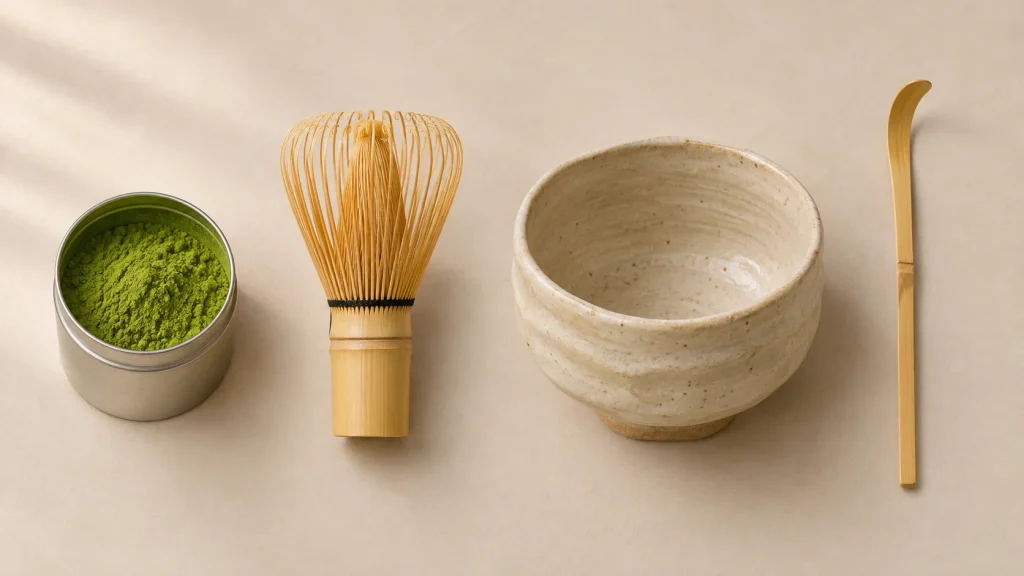
Then think about what the person already owns. If they already have a good bowl or a whisk they like, a full kit may duplicate it, and a fresh tin of powder or a single upgraded tool might be the better gift. If they own nothing at all, a kit saves them from discovering, mid-whisk, that a cereal bowl is too shallow.
Before you order, a quick look at the listing tells you most of what you need:
- Contents. Check that the powder, whisk, bowl and measuring tool are all listed, rather than shown in a photo but sold separately.
- The powder. See how much is included, where it comes from and how the seller suggests preparing it. A kit with a vague description of its tea tells you little about the most important part.
- Instructions. A printed card or clear online guide helps a beginner make a good first bowl without searching for videos.
- Packaging. If the box will be wrapped and opened as it arrives, check whether the seller describes or shows gift packaging.
Our matcha starter kit guide compares complete pre-made kits, including a gift-boxed option, and explains a cheaper build-your-own route for someone who already has a bowl. It also covers which extras a beginner can safely skip.
A kit isn’t the right gift for everyone. An experienced drinker with a full set of tools may get more use from good powder, and someone who never wants to whisk will be happier with an instant mix. The next sections cover both.
For the Matcha Purist
This is the person who whisks matcha with water most days and has clear views on foam and flavor. They probably have the tools already, so the powder is usually the gift that gets used. Still, don’t assume: a purist might also want a replacement whisk or a better bowl, so look at what they own before you decide.
If you’re choosing powder, start with how they drink it. For plain matcha made with water, look for a powder that its seller recommends for drinking straight, with clear details about where it comes from and who made it. If they already have a favorite maker or region, staying close to it is usually safer than guessing at something new.
Labels can be misleading here. Ippodo, a Kyoto tea company, says it doesn’t use the term “ceremonial grade” because it was invented to market matcha to the West and isn’t used in Japan. So treat a grade name as one clue among several, alongside origin, producer, the seller’s preparation guidance and any harvest or packing information.
Size matters too. Matcha loses freshness once it’s opened, and Ippodo recommends using it within a month of opening for the best taste. A modest tin they’ll finish while it’s at its best can be a better gift than a large bag that sits open for months.
Check the seller’s best-by date and storage guidance so the recipient has time to enjoy the tea. A packing date tells you when it was packed, while a best-by date indicates the seller’s recommended quality window. Keep the package sealed until gifting and store it away from heat and light.
Our guide to the best matcha powder compares options for drinking straight and for lattes, which helps if you’re not sure where to start. If you’d like the gift to feel more personal, add a short note with how they might enjoy it, or pair two smaller tins so they can compare styles.
For the Convenience Matcha Drinker
Some people love matcha but don’t want the bowl, whisk and washing up. For them, a convenient format they’ll actually reach for on a busy morning is a better gift than tools that stay in the cupboard.
Instant and ready-to-mix matcha products vary a lot, so read the label before you buy. Some are pure matcha, while others are mixes with added sugar, milk powder or flavorings. That difference matters for someone who avoids sugar or dairy, and it also changes the taste.
Check the preparation instructions as well. Some products are designed for hot water, some say they work in cold milk, and some still need a shake or a quick froth to mix properly. Don’t assume a product will dissolve in cold milk, or replace whisking, unless its own instructions say so.
Think about where they’ll drink it. Single-serve sticks or sachets are easy to carry to work or on a trip, while a tin with a scoop suits someone who makes matcha at home most mornings. If they watch their caffeine, keep in mind that matcha is a tea and contains caffeine.
Our guide to the best instant matcha covers options for people who want matcha without the whisking routine. To make it feel more like a gift, pair a tin with a cup or tumbler they’ll use, chosen to fit how they drink it.
For Tea Drinkers (Beyond Matcha)
Not every tea lover drinks matcha, and a well-chosen tea can be just as thoughtful. Start with what they already enjoy: black, green, oolong or herbal, plain or flavored, strong or delicate. If you’re unsure, a small selection lets them try a few styles without committing to one large bag.
Think about caffeine, too. Some people want a bold cup to start the day, while others prefer caffeine-free herbal blends in the evening. Our guide to the best teas for the morning covers stronger, everyday options for that first cup.
For someone who likes a calm, steady cup while working, our guide to teas to drink while you work compares green, black and other teas by taste, preparation and caffeine. It’s a gift for their routine, not a promise of better concentration.
Format is a matter of preference. Loose-leaf tea, pyramid sachets and good tea bags can all make thoughtful gifts, depending on how much time the person wants to spend on each cup. If you choose loose leaf, check whether they own an infuser or teapot; if not, add one so the gift works on the first morning.
Presentation can be simple. An airtight tin keeps loose tea tidy once the bag is opened, and a small card with the tea’s name and steeping instructions from its seller saves them from hunting for the packaging later.
Small Add-On Gifts
Small extras can complete a bigger gift or stand on their own, as long as they fit the person’s existing equipment. A few that are often useful:
- A spare bamboo whisk. Bamboo whisks are handmade and wear out over time. Ippodo notes that a chasen won’t last forever and suggests replacing it once many tips are broken and whisking gets harder.
- A whisk holder. A holder supports the whisk in a rounded shape while it dries, as Ippodo describes its whisk stand. Check that it suits the size of their whisk.
- A handheld frother. Useful for someone who makes matcha lattes, hot or iced. Check whether it runs on batteries or recharges, and how easy the head is to clean.
- A sifter. Helpful for someone who finds lumps in their matcha. Check the size against the tins or bowls they use.
- Cups or a bowl. Choose a matcha bowl that is wide and deep enough to whisk in, since some decorative bowls are too small. For cups, think about whether they drink small servings straight or larger lattes.
For any specific product, check its dimensions, materials and care instructions, because those vary more than the photos suggest. If you’re adding a powder, the purist and convenience sections above cover how to choose one.
Putting a Gift Together
A good combined gift usually has one main item and one or two extras that help it get used. A tin of powder with a holder for a whisk they already own, an instant matcha with a tumbler, or loose-leaf tea with an infuser all work because each piece supports the others.
Avoid stacking several items that do the same job, such as two whisks or a kit plus a separate bowl. If you’re unsure about sizes or preferences, ask the seller about returns or include a gift receipt where one is offered.
Buying for a Coffee Person Instead?
If someone on your list reaches for coffee rather than tea, our coffee lover gift guide uses the same approach. It’s organized by budget and by how they brew, from pods to espresso.
FAQ
Is matcha a good gift for someone who’s never tried it?
It can be, if you make the first step easy. A complete starter kit or a straightforward instant matcha gives a beginner a simple way in, while a rare tin aimed at experienced drinkers can be confusing without the tools or know-how to make it. If you’re unsure whether they’ll like the taste, a small tin is a lower-risk start.
How do I know which grade of powder to buy?
Start with how they’ll drink it rather than the grade name. For matcha made with plain water, choose a powder its seller recommends for drinking straight; for lattes, a powder sold for milk drinks is a practical, often lower-cost option. Grade names aren’t used consistently, so check origin, producer and preparation guidance, and if you’re still unsure, a complete kit with a powder chosen for beginners takes the guesswork out.
Whatever you choose, the gifts that get used are the ones that fit how the person already drinks tea, or the next step they’ve been curious about. For more on choosing, preparing and enjoying matcha, visit our matcha guide.
